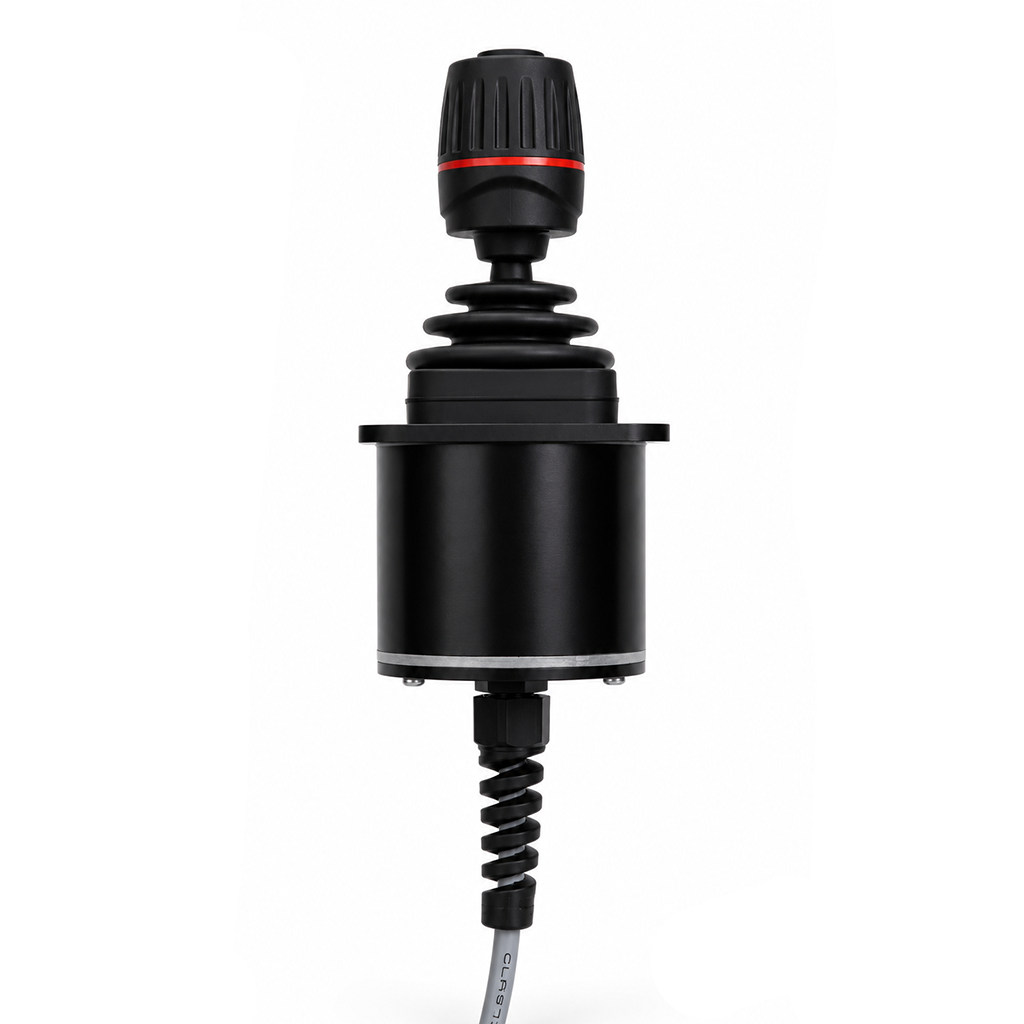
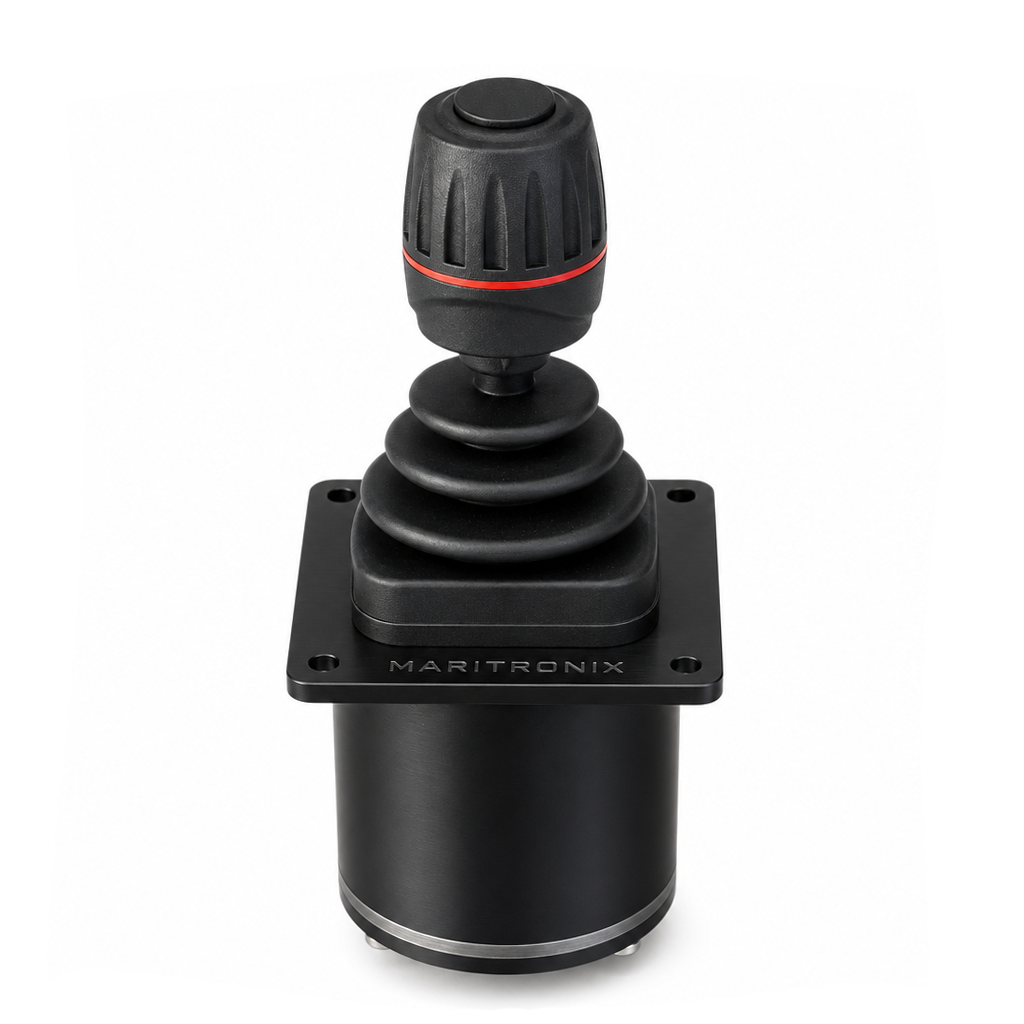
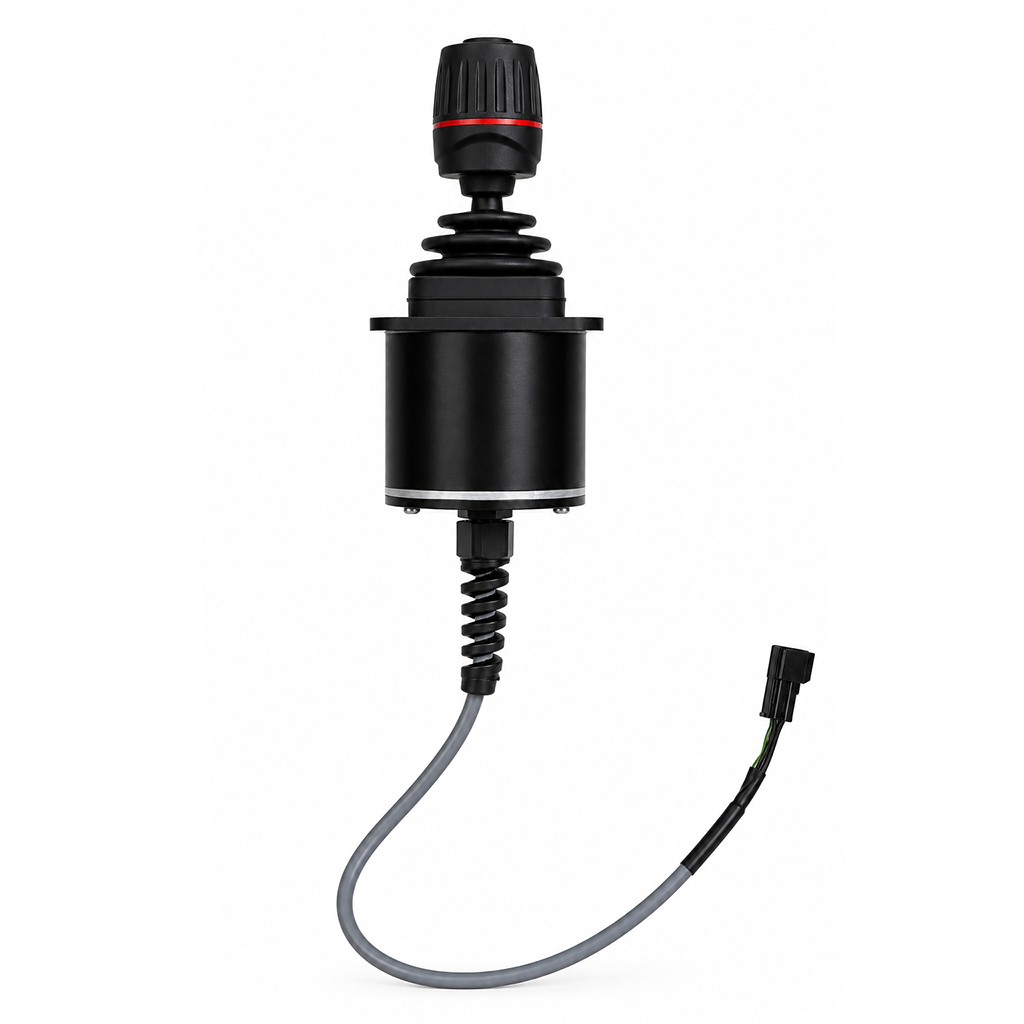
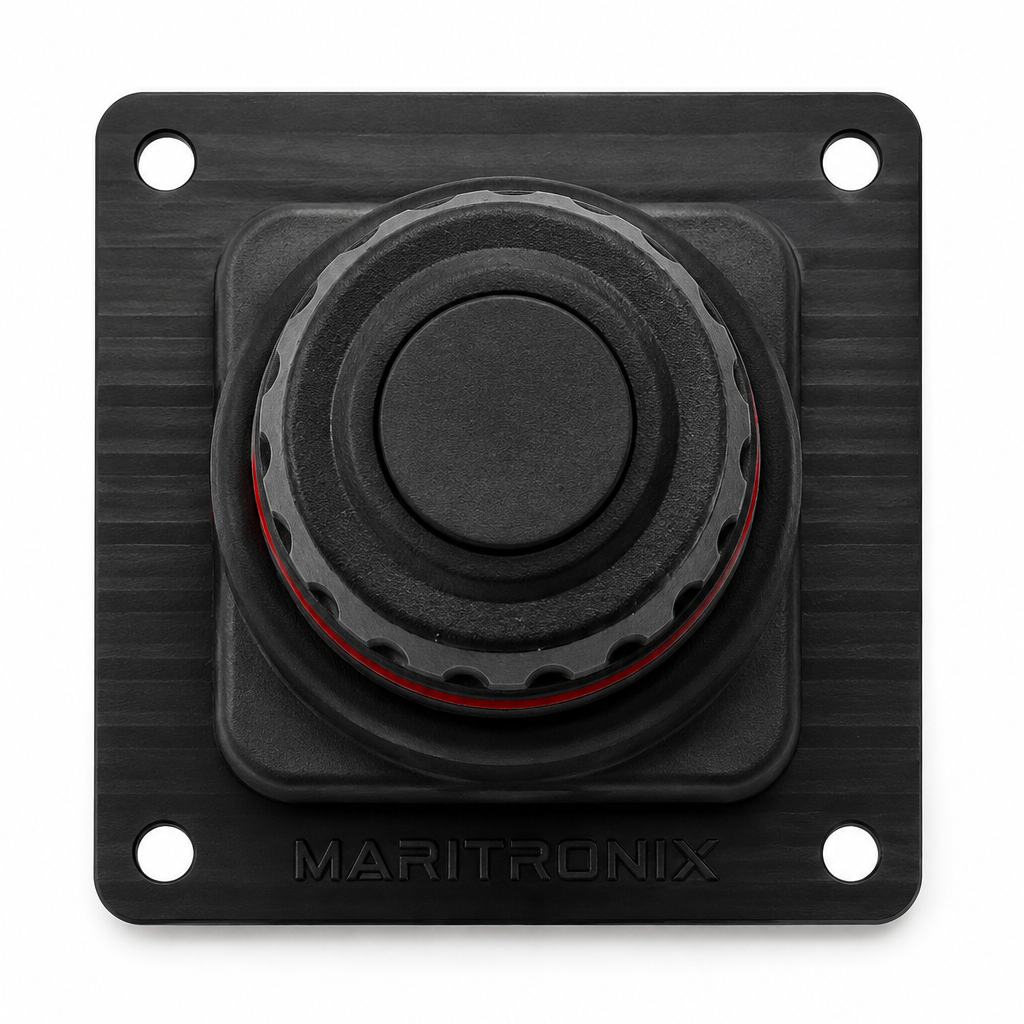
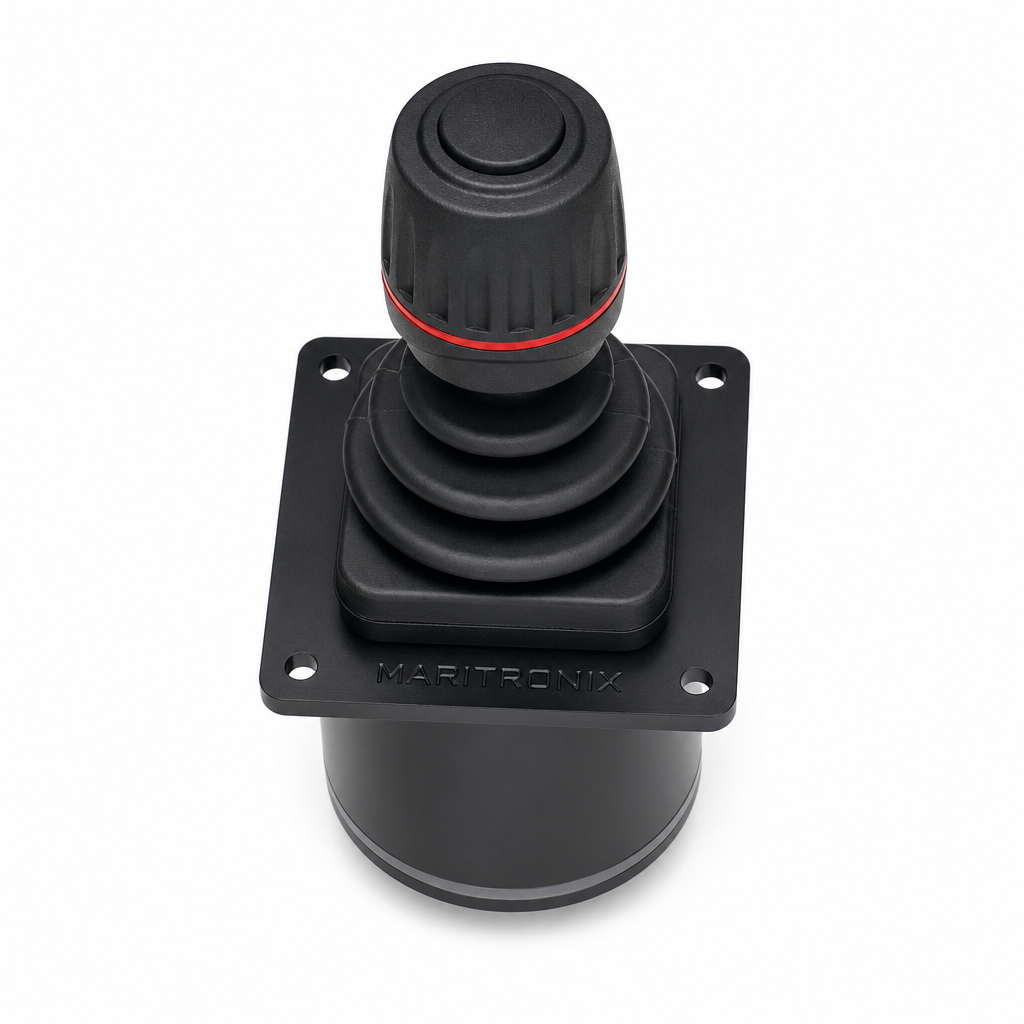
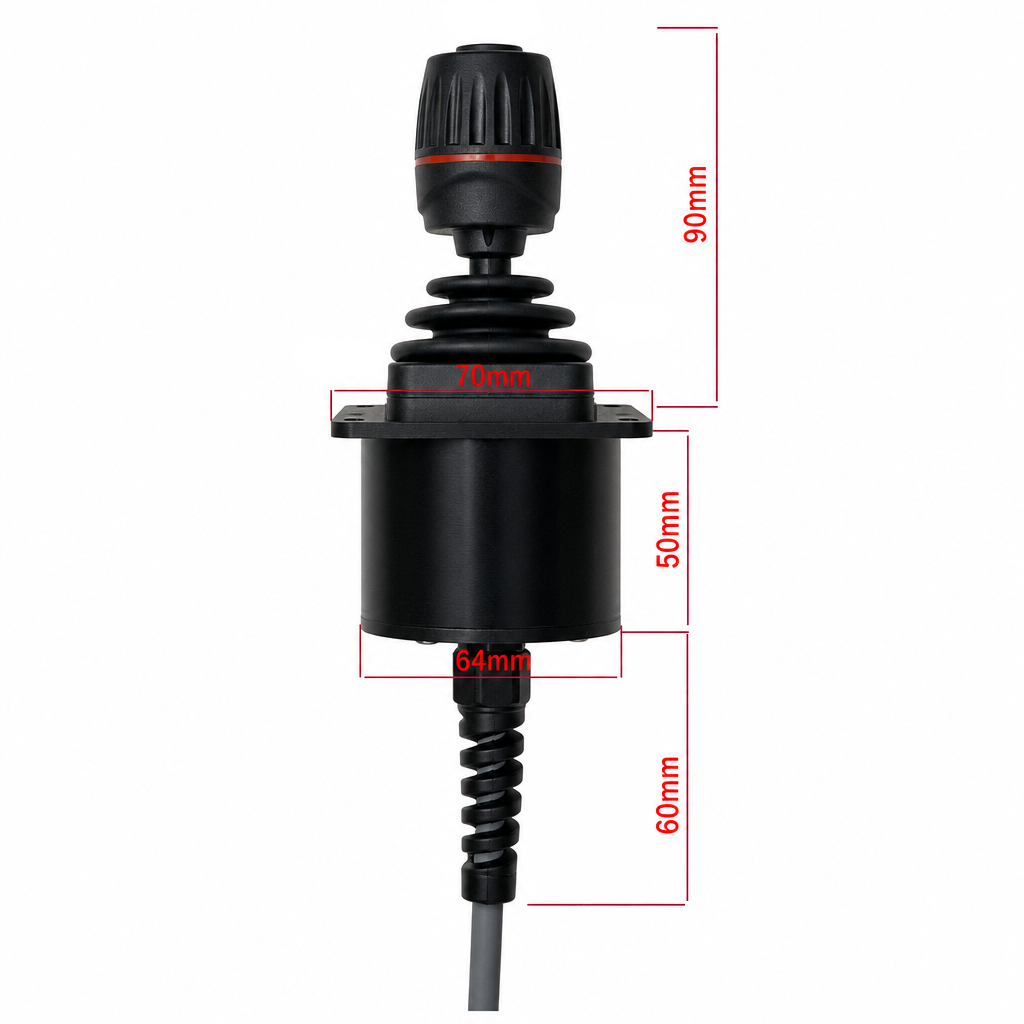
The Maritronix JX-3 Docking Joystick is a 3-axis CAN-Bus helm joystick designed for precise yacht manoeuvring,
docking, undocking, and low-speed control in marinas. It allows the skipper to control the vessel more intuitively
by moving or rotating the joystick in the desired direction.
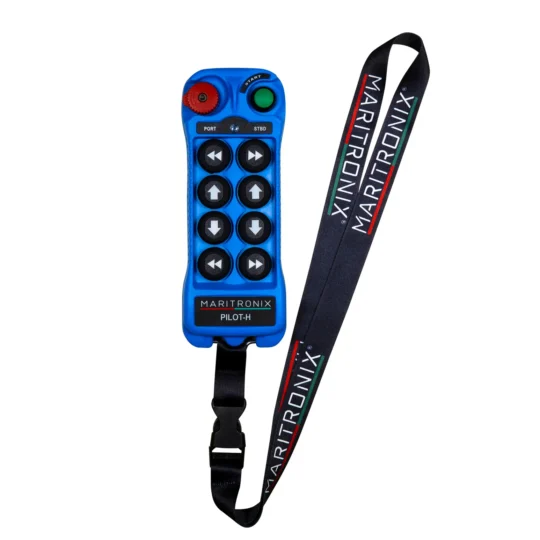
The JX-3 can be used as an optional joystick station for PILOT-H PRO systems or integrated into compatible
Maritronix CAN-Bus yacht control solutions. Depending on the vessel configuration, the connected Maritronix
control system can coordinate engine and thruster commands to support forward movement, reverse movement,
diagonal manoeuvres, sideways movement, and rotation.
The joystick is especially useful when entering or leaving a marina, approaching a berth, manoeuvring near pontoons,
stern-to berthing, and controlling the yacht in tight spaces where smooth and predictable low-speed response is required.
Two-Stage Proportional Docking Control
When used with PILOT-H PRO or a compatible Maritronix control system, the JX-3 supports a two-stage
position-based docking algorithm. A small joystick movement activates the first calibrated engine response.
This first response is normally used for basic gear-in or idle-speed movement.
When the joystick is moved further, the system activates a stronger calibrated engine response. This gives the
operator more docking power when required, for example in wind, current, or when a faster correction is needed
inside the marina.
This two-stage logic allows the skipper to use small joystick movements for gentle corrections and larger
joystick movements for stronger vessel response. The engine response levels are set during system calibration
and depend on the boat, engine control system, and required docking power.
Joystick Dead Zone for Safer Operation
The joystick algorithm includes a small center dead zone. Commands are activated only when the joystick is
moved more than approximately 10% from the center position.
This helps prevent unwanted engine or thruster activation caused by very small accidental joystick movements,
vibration, or light contact with the joystick handle.
How the JX-3 Docking Algorithm Works
The JX-3 joystick direction is interpreted by the connected Maritronix control system as a movement command
for the vessel. Instead of operating each engine and thruster separately, the skipper moves the joystick in the
direction in which the boat should move.
The control system then calculates the required response and activates the available engine and thruster outputs
according to the selected configuration.
| Joystick command | System behaviour | Boat movement |
|---|---|---|
| Forward | Both engines engage forward. Small movement activates the first calibrated response; further movement activates the stronger response. | Boat moves forward. With further joystick movement, the boat moves forward faster. |
| Reverse | Both engines engage reverse. Small movement activates the first calibrated response; further movement activates the stronger response. | Boat moves backward. With further joystick movement, the boat moves backward faster. |
| Forward diagonal | One engine is activated first to create the required turning movement. With further joystick movement, the main engine increases response and the second engine joins to support the manoeuvre. | Boat moves forward left or forward right, depending on joystick direction. |
| Reverse diagonal | One engine is activated first in reverse. With further joystick movement, the main engine increases response and the second engine joins to support the manoeuvre. | Boat moves reverse left or reverse right, depending on joystick direction. |
| Side movement | The engines remain in neutral and the bow and stern thrusters are used to move the vessel sideways. | Boat moves sideways to port or starboard. |
| Joystick rotation | The engines counter-rotate. Small rotation activates the first response; further rotation activates the stronger response. | Boat rotates clockwise or counter-clockwise around its axis. |
| Top button + rotation | The thrusters can assist the rotation in the same turning direction when supported by the vessel configuration. | Increased turning force during rotation. |
| Top button + joystick direction | The top button can be used for thruster-only control without engaging the engines. | Bow or stern thruster control only, depending on joystick direction and system configuration. |
Forward and Reverse Movement
When the joystick is pushed forward, both engines are engaged in forward gear. A small forward movement
activates the first calibrated engine response on both engines. When the joystick is pushed further forward,
both engines increase to the stronger calibrated response and the yacht moves forward with more thrust.
When the joystick is pulled backward, both engines are engaged in reverse gear. A small reverse movement
activates the first calibrated engine response on both engines. When the joystick is pulled further backward,
both engines increase to the stronger calibrated response and the yacht moves backward with more thrust.
Diagonal Movement
In diagonal directions, the system first activates the engine that creates the required turning movement.
This allows the yacht to start moving diagonally in a controlled and predictable way.
When the joystick is pushed further, the main engine increases its response and the second engine is also
activated to support the manoeuvre. This gives the skipper more power while maintaining the intended diagonal
movement direction.
Side Movement with Bow and Stern Thrusters
When the joystick is moved directly to the left or right, the engines remain in neutral. Side movement is
created by using the bow and stern thrusters.
This function is useful when moving sideways toward or away from a pontoon, correcting the yacht position
inside a narrow berth, or making small lateral adjustments during docking.
If the vessel does not have a physical stern thruster, a virtual stern thruster function may be used depending
on the system configuration.
Rotation Function
The JX-3 also supports joystick rotation. When the joystick is rotated from the center position, the connected
control system can activate counter-rotation of the engines.
For clockwise rotation, one engine is commanded forward and the other engine is commanded reverse. For
counter-clockwise rotation, the engine directions are reversed. A small rotation activates the first calibrated
response, while further rotation activates the stronger response.
When supported by the vessel configuration, pressing the top button during joystick rotation can add bow and
stern thruster assistance in the same turning direction. This increases the turning force and helps the yacht
rotate more effectively in tight marina spaces.
Top Button Thruster-Only Mode
The top button can also be used to activate thruster-only control without engaging the engines.
To use this function, the joystick is first kept in the neutral center position. The operator then presses and
holds the top button and moves the joystick in the required direction. Depending on the joystick direction and
system configuration, the bow or stern thruster is activated.
This allows the operator to make small position corrections using only the thrusters, without engaging the
main engines.
Designed for Marina Manoeuvring
The Maritronix JX-3 Docking Joystick is designed for situations where precise low-speed control is important.
This includes entering or leaving a marina, approaching a berth, manoeuvring close to other boats, stern-to
berthing, moving near pontoons, and holding or correcting the yacht position in wind or current.
The joystick makes low-speed control easier because the skipper can focus on the desired boat movement
rather than controlling each engine and thruster separately.
Compatibility and Integration
The Maritronix JX-3 is a CAN-Bus joystick module. It requires a compatible Maritronix control interface,
PILOT-H PRO system, Maritronix gateway module, or another compatible Maritronix CAN-Bus yacht control
solution.
The JX-3 is not intended to be connected directly to engines, thrusters, transmissions, or third-party control
systems without the correct Maritronix interface. The required integration method depends on the vessel
configuration, engine control system, number of engines, bow thruster, stern thruster, and available connection
points.
Important Note
The JX-3 requires a compatible Maritronix CAN-Bus control interface or yacht control system. It is not designed
for direct connection to engines, thrusters, transmissions, or third-party control systems without the correct
Maritronix interface.
Before delivery, Maritronix checks the vessel configuration, engine control system, helm station layout, number
of engines, bow thruster, stern thruster, and available connection points. This allows the correct integration
method to be selected for each boat.