


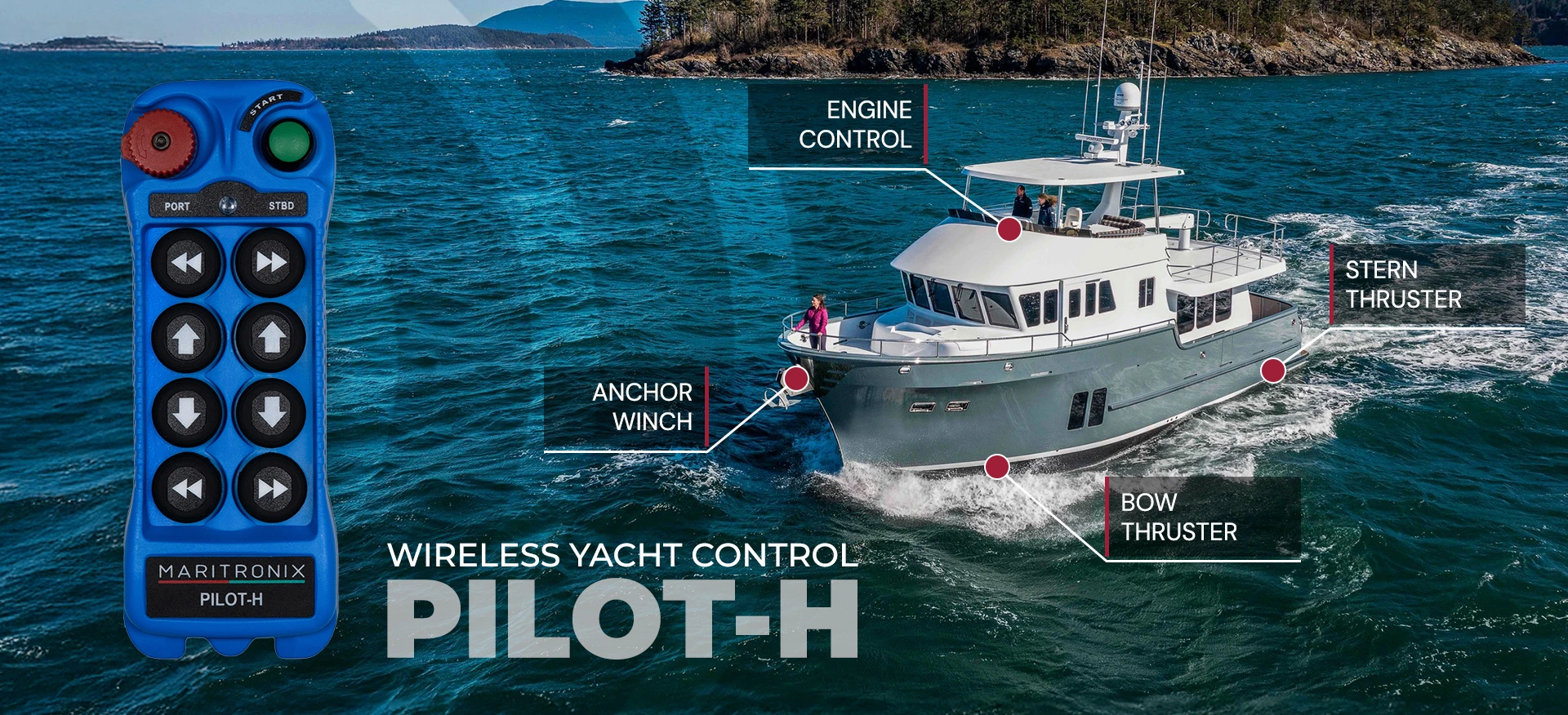

PILOT-H Wireless Yacht Control System
The PILOT-H wireless yacht control system is designed for vessels with one or two engines and is engineered with a strong focus on safety, reliability, and industrial-grade performance.
The system has been successfully tested and proven to operate reliably with a wide range of marine engine control systems, including Volvo Penta, Yanmar, Cummins, Mercury MerCruiser, MAN, Suzuki, Honda, Caterpillar, and Yamaha.
For modern electronic propulsion systems, PILOT-H can be integrated through dedicated Maritronix gateway modules. These gateways provide a safe and reliable interface between the PILOT-H system and the original engine control architecture.
The integration is carried out without disturbing or modifying the internal communication network of the engine, transmission, or other onboard control components. This allows PILOT-H to communicate with compatible propulsion systems in a controlled and secure way while preserving the original functionality and safety logic of the manufacturer’s engine system.
To ensure a high level of operational safety, PILOT-H incorporates two independent microcontrollers. Each control path uses two independent relays connected in series. By using time-tested, high-quality industrial electrical components, we deliver a robust system suitable for demanding marine environments.
The system also uses a Hamming code algorithm for reliable wireless signal transmission, and an emergency stop button compliant with the ISO 13850 standard is included.


Functions and Operation
The system is capable of controlling up to six functions:
- * Port Engine Control
- * Starboard Engine Control
- * Anchor Windlass Control
- * Bow Thruster Control
- * Stern Thruster Control
- * Horn Control
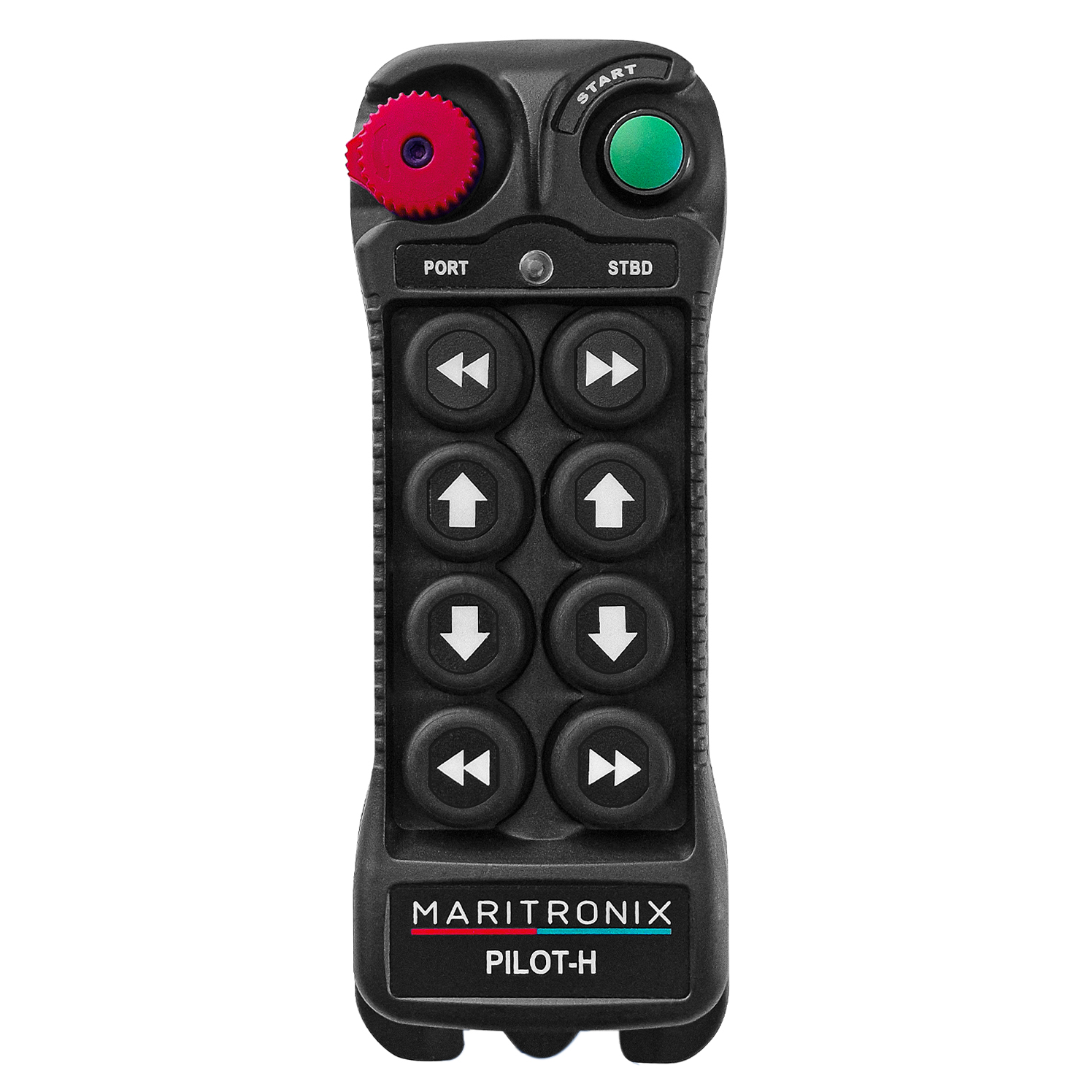
Clearly marked buttons allow the user to operate the transmitter comfortably. The transmitter enclosure is rated IP65 and is buoyant in water. The operating range of the system is up to 100 meters.
Configuration and monitoring software is accessible via a WLAN-compatible device. Two AA batteries power the transmitter for a minimum of 12 months without the need for charging. An LED on the transmitter indicates the battery status, while two status LEDs on the aluminum receiver enclosure allow fast troubleshooting.